UN unveils global heat resilience strategy at inaugural conference in Singapore

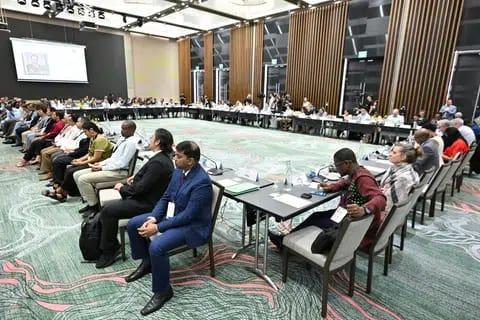
Attendees at the inaugural Global Cooling Pledge Assembly at Parkroyal on Beach Road on Sept 17.
ST PHOTO: LIM YAOHUI
SINGAPORE – The United Nations is looking to work with countries, including Singapore, to chart a strategy to protect people from extreme heat, one of the deadliest and fastest-growing climate risks worldwide.
This strategy – called the Global Heat Resilience Roadmap – will also set out practical approaches to safeguard water and food security, schools, hospitals, workplaces and energy infrastructure during heatwaves.
This was announced by the UN on Sept 17 at a four-day forum held at Parkroyal on Beach Road hotel in Singapore.
The UN Environment Programme (UNEP) had convened more than 60 countries at the inaugural Global Cooling Pledge Assembly to develop ways to cut carbon emissions from air-conditioning.
Expanding access to alternative cooling strategies that do not guzzle much electricity, especially for vulnerable groups like farmers, was also discussed.
Examples of such passive cooling efforts can include developing building designs to maximise natural ventilation, planting trees for shade, and optimising wind flow when building new estates.
Part of the strategy is also to ensure that cooling solutions do not inadvertently lead to a rise in greenhouse gas emissions due to excessive reliance on air-conditioning. Cooling already accounts for about 20 per cent of global electricity use, and demand is expected to more than triple by 2050.
The aim is to cut emissions from cooling by 68 per cent by 2050, a target set by UNEP and the signatory countries in 2023 when the Global Cooling Pledge was introduced.
The signatory countries, which include Singapore, are collectively called the Intergovernmental Committee on Cooling, which comprises more than 70 nations. Other signatories include Nigeria, the Philippines and the UK.
When there is a sudden surge in air-conditioning use, especially during a heatwave, the power grids can get overwhelmed, leading to blackouts. During the European heatwave in June, a transformer failure occurred, leaving around 68,000 households out of power in Finistere, France.
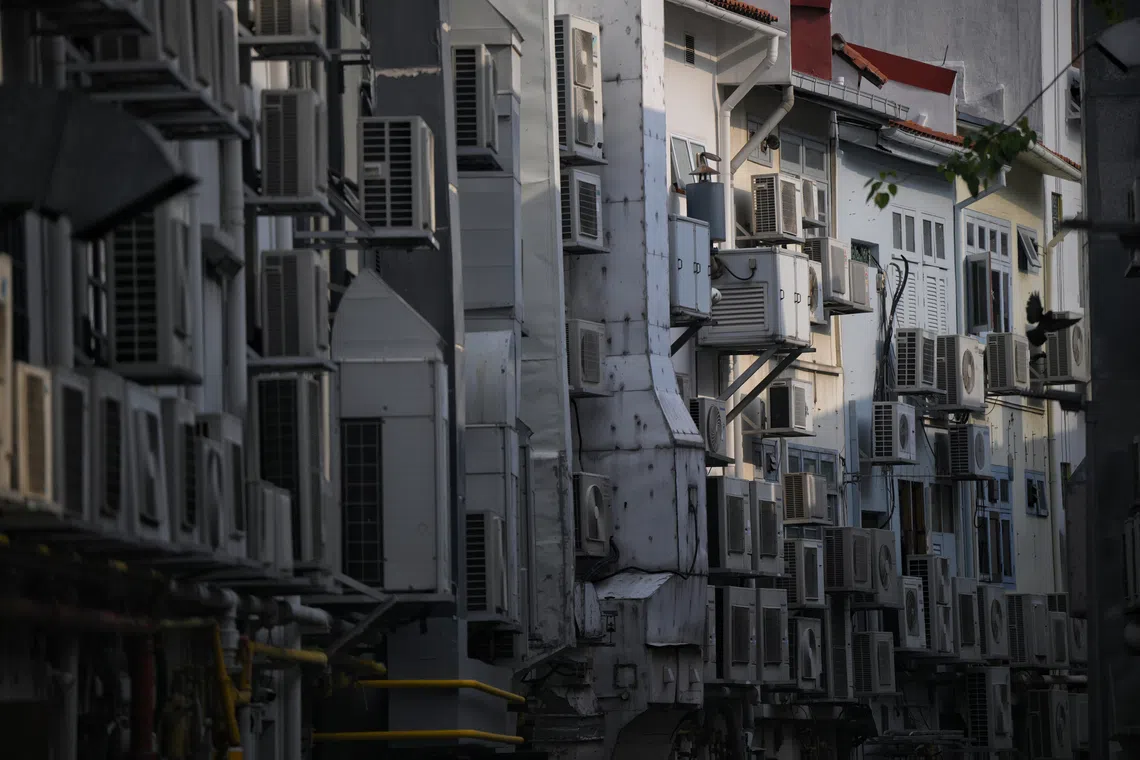
When there is a sudden surge in air-conditioning use, especially during a heatwave, the power grids can get overwhelmed, leading to blackouts.
ST PHOTO: MARK CHEONG
The launch of this initiative comes as the ongoing warming El Nino phenomenon is set to intensify into a very strong event in the coming months, with higher risks of drought and extreme heat.
Over the first two days of the forum, which started on Sept 15, through roundtables, training and site visits, policymakers, academics and businesses explored how sustainable cooling and heat-resilience solutions can work in dense cities.
Briefly introducing the plans for the road map on Sept 15, UNEP’s global chief heat officer Eleni Myrivili said countries first need the political mandate to recognise severe heat as a disaster and have policies in place to make the country more heat resilient.
Countries then have to think about the greatest risks that severe heat can pose to them and the suite of solutions that are most appropriate.
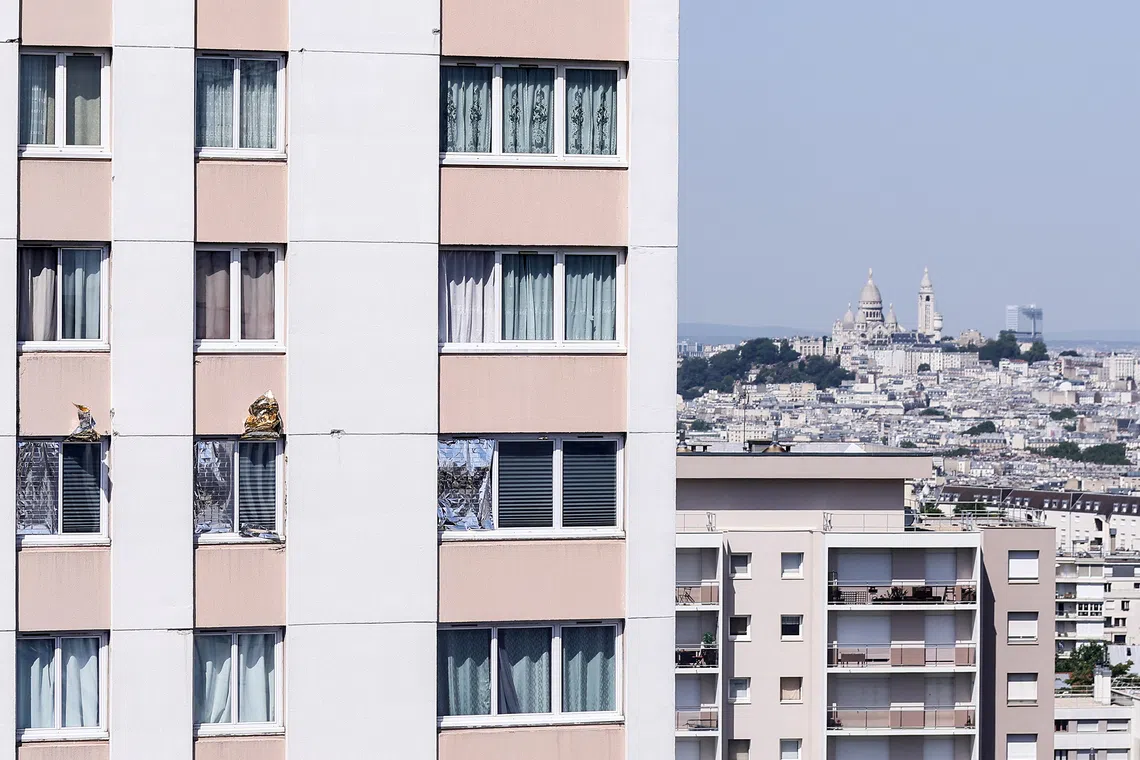
People use survival blankets to reflect the sun off their windows and lower the temperature on one of the hottest days on record in Paris, France, on June 24.
PHOTO: EPA
Those solutions can include changing behaviour, such as opening the windows for cross ventilation; situating a park next to an urban neighbourhood; using fans and energy-efficient air-conditioning; and having emergency plans in place to save lives during a heatwave.
Myrivili also urged delegates to think about the most suitable ways to finance these solutions for their countries. Unlocking finance for cooling was a key theme at the assembly, and some solutions floated include mobilising finance from governments and philanthropic partners.
To ensure the road map is eventually implemented well, processes should be in place to track outcomes and progress, said Myrivili.
More details about building up the strategy will be revealed on Sept 18, and participating countries – which have not been confirmed – have a couple of years to develop it, said UNEP.
The strategy will also build on existing national plans.
For example, Singapore recently set up a Heat Resilience Policy Office to oversee heat management efforts across the country by coordinating action, overseeing research and representing Singapore internationally.
It had also earlier announced a response plan to heatwaves, where the Republic will open more than 300 cooling centres during such episodes.
The centres will be air-conditioned, and they include community centres, selected residents’ committees or residents’ network centres, and some indoor sports halls.
With policies such as imposing minimum energy performance standards on air-conditioners sold here, the average energy efficiency of air-conditioners in Singapore has improved by more than 60 per cent, said Minister for Sustainability and the Environment Grace Fu at the assembly on Sept 17.
Planning must be backed by policy and laws so that solutions can be implemented at scale, she added.
“Heat affects public health, increases the risks of heat-related and infectious diseases, puts vulnerable groups at greater risk and disrupts business operations. No single agency nor sector can address these effects alone,” said Fu.
On Sept 17, Singapore also received the inaugural Cool Leaders award from UNEP, in recognition of its leadership in heat resilience and passive cooling.
The award serves to highlight outstanding leadership in advancing sustainable cooling across policy and innovation, according to UNEP.
Receiving the award, Fu said: “We received this award with the greatest humility. Singapore might have started the planning process early, but we are not there at all. We’re just starting in the process.
“There are many challenges ahead of us. It is not just about cooling the place, but to cool it in a sustainable way, in a way that is comfortable for our people, but also in a way that’s resilient for our businesses.”
The other recipients of the award are the United Arab Emirates – a co-chair of the Intergovernmental Committee on Cooling – and Dong Mingzhu, chairwoman of the world’s largest specialised air-conditioning manufacturer Gree Electric Appliances.
Dong spearheaded the development of ultra-efficient, low-carbon cooling technologies, including the zero-carbon source air-conditioning system. The system combines solar power, energy storage and advanced technologies to cut air-conditioner carbon emissions by around 85 per cent.