The Azerbaijani brand ASAN xidmet is exported among 10% of the world's population
The Azerbaijani public services model, ASAN xidmət, has achieved a massive global breakthrough, covering approximately 10% of the world's population and providing cutting-edge services to over 800 million people across 50 countries. The project, which originated in Baku as a local anti-corruption reform, is now recognized by the UN as a benchmark for transparency and is being exported worldwide.
From Baku Initiative to UN Recognition
The success story of ASAN xidmət began in Azerbaijan in July 2012. By decree of President Ilham Aliyev, the State Agency for Public Services and Social Innovations was established. The primary objective of the reform was the complete eradication of bureaucracy, bribery, and time delays in obtaining documentation. The word “asan” translates from Azerbaijani as “easy” or “simple,” forming the core philosophy of the "one-stop-shop" concept.
* December 2012: The first pilot center opened in Baku, consolidating services from various ministries under one roof.
* Operating Principle: Citizens gained the ability to issue passports, driver's licenses, and commercial documents in a comfortable environment, free of queues and intermediaries.
* UN Recognition: In 2015, the Azerbaijani model was honored with the United Nations Public Service Award for its fundamental transformation of the public sector.
International Footprint: Who is Implementing the ASAN Experience?
The domestic success of the reform quickly caught the attention of the global community. According to official data from the State Agency, 52 countries are actively studying the model, and the "one-stop-shop" concept and service standards are already operational across several continents.
Key examples of nations successfully adapting the Azerbaijani practice include:
* Uzbekistan and Afghanistan: Deployed networks of public service centers based on the Baku standard.
* Indonesia and Pakistan: Successfully operationalized the model to optimize public interaction for their multi-million populations.
* Uganda and Ethiopia: Actively utilize ASAN standards to build similar service networks in East Africa. In Ethiopia, this foundation led to the creation of the national MESOB model, spanning over 100 centers.
* Growing Interest: Delegations from countries such as Iraq, Gambia, Morocco, Mozambique, and Burkina Faso have officially expressed interest in directly importing Azerbaijani public sector advancements.
Digital Ecosystem: e-Gov, ABAD, and Innovations
Modern ASAN is not merely a network of physical offices, but a comprehensive digital and social ecosystem. Azerbaijan has transformed public service delivery through key internal subsystems that are now being presented on the international stage:
1. Electronic Government (e-Gov): An innovative platform that transitioned hundreds of public transactions into an online format. Thanks to integrations like the public payment system ASAN Pay, the visa platform ASAN Visa, and the secure mobile digital signature Asan Imza, citizens can sign documents and pay fees remotely.
2. ABAD Service (Easy Support to Family Business): A public legal entity established to support small businesses and family farms in rural areas. ABAD manages the entire cycle "from production to counter"—providing farmers with equipment, assisting with branding, design, certification, marketing, and organizing sales in specialized ethno-boutiques and major retail chains.
3. INNOLAND and AI Hub: The ecosystem incorporates the INNOLAND Incubation and Acceleration Center to support startups, as well as the newly launched ASAN AI Hub, which integrates artificial intelligence solutions from young developers directly into public administration.
10% of the Planet: Data from the Baku Briefing
On the eve of the upcoming joint international ASAN xidmət and UN summit in Baku, Mahammadali Khudaverdiyev, Head of the International Relations Department of the State Agency, announced the key metrics of the model's global reach:
Performance Metric Global Scale of Application
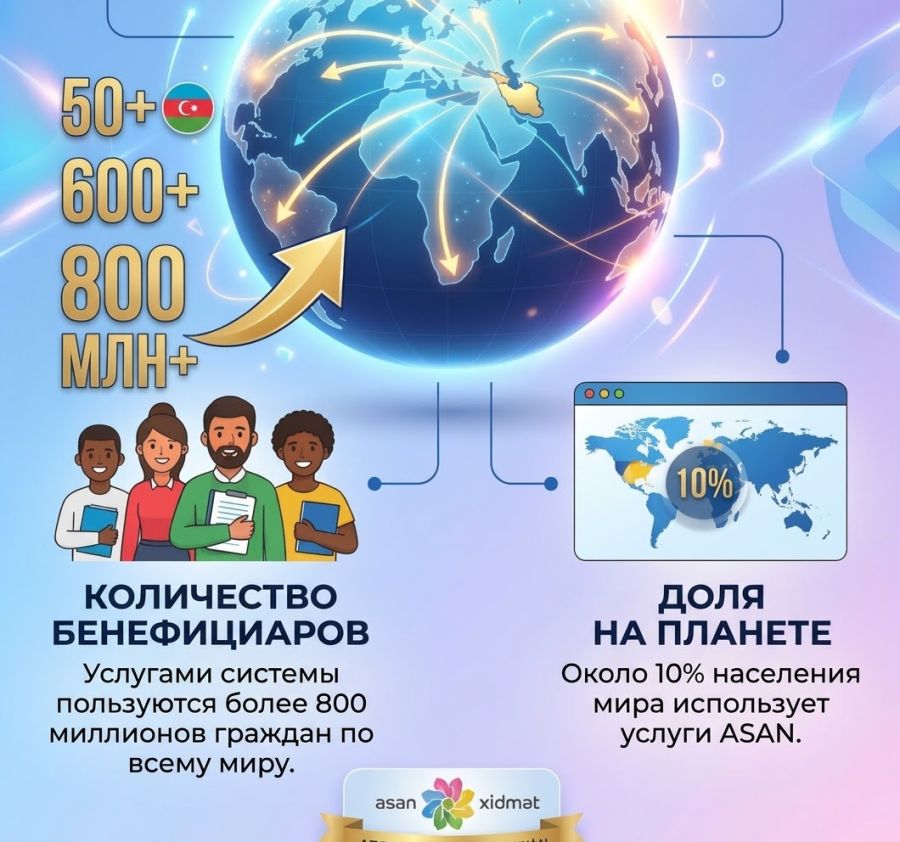
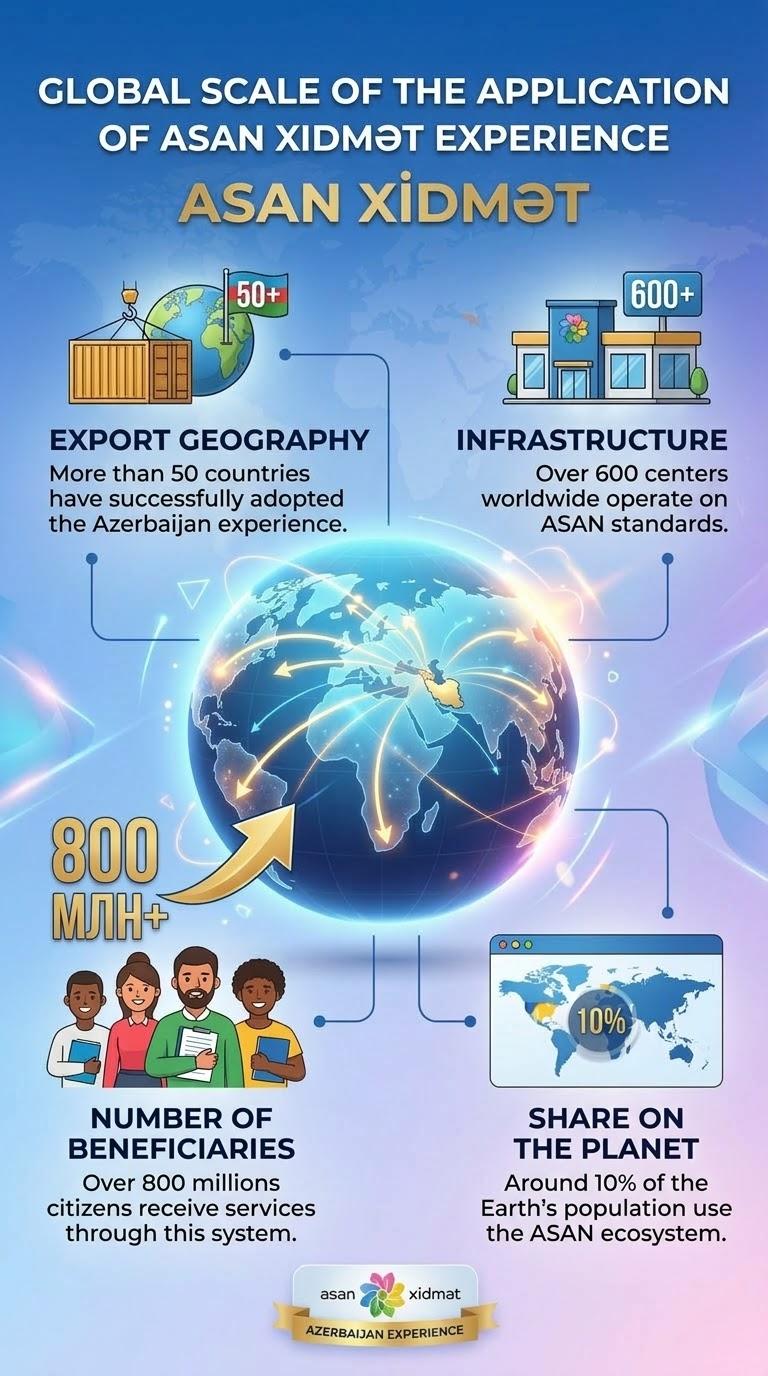
Export Geography More than 50 countries have successfully adapted the Azerbaijani model
Infrastructure Over 600 centers worldwide operate under ASAN standards
Number of Beneficiaries More than 800 million citizens receive services through this system
Global Share Around 10% of the Earth's population utilizes the ASAN ecosystem
This widespread international acclaim confirms that the intellectual product developed in Baku has become an effective UN tool for achieving the Sustainable Development Goals, helping nations implement the core humanitarian principle of "leaving no one behind."