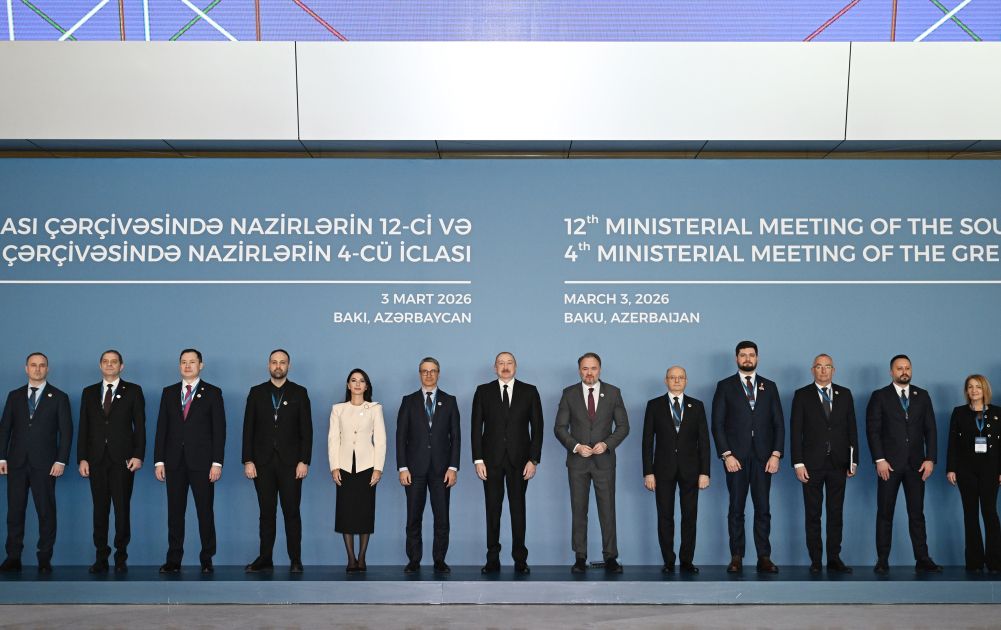
Baku hosted 12th Ministerial Meeting of Southern Gas Corridor Advisory Council and 4th Ministerial Meeting of Green Energy Advisory Council
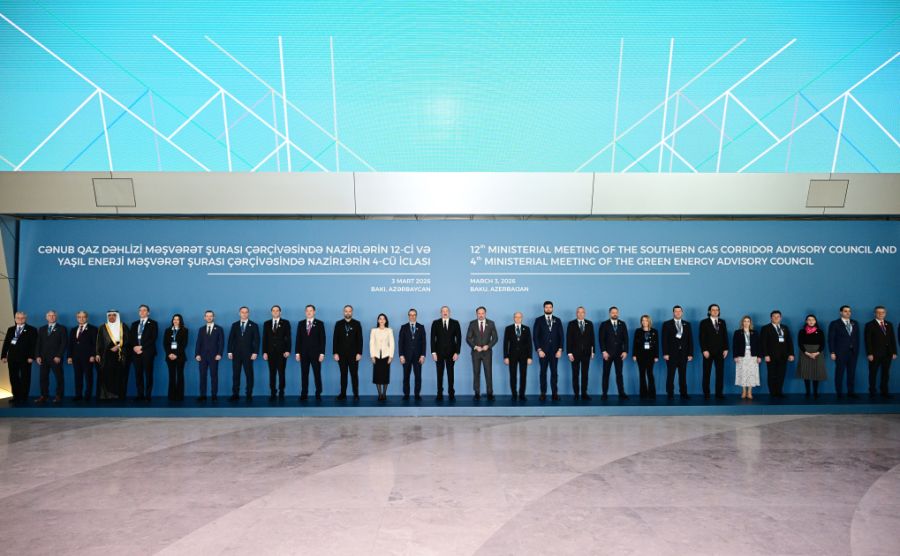
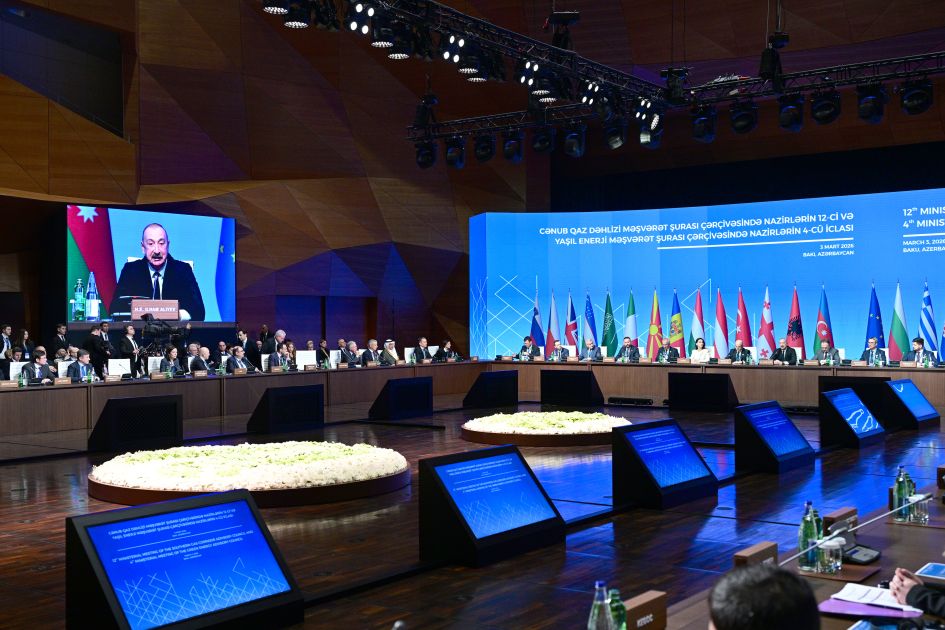
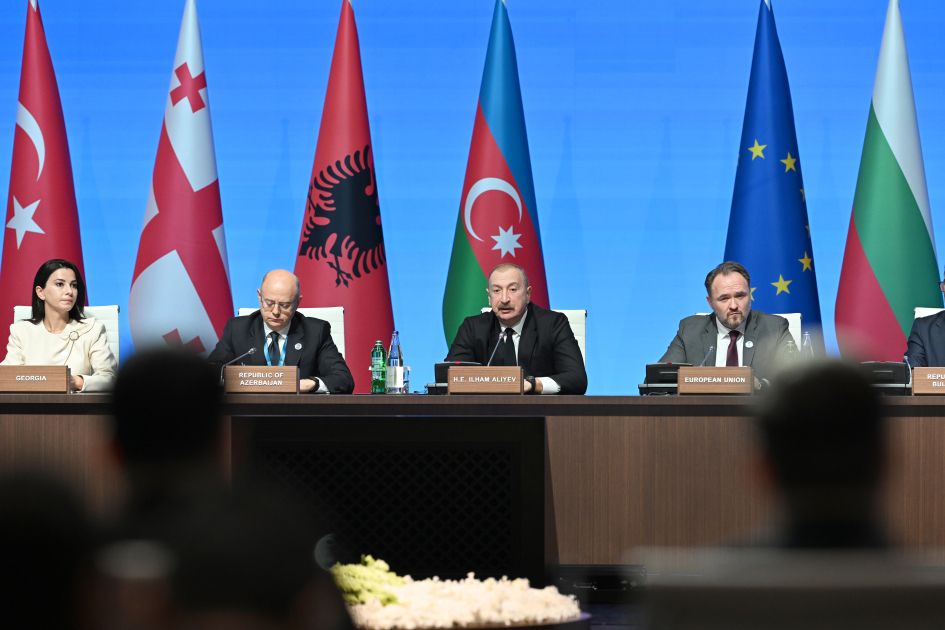
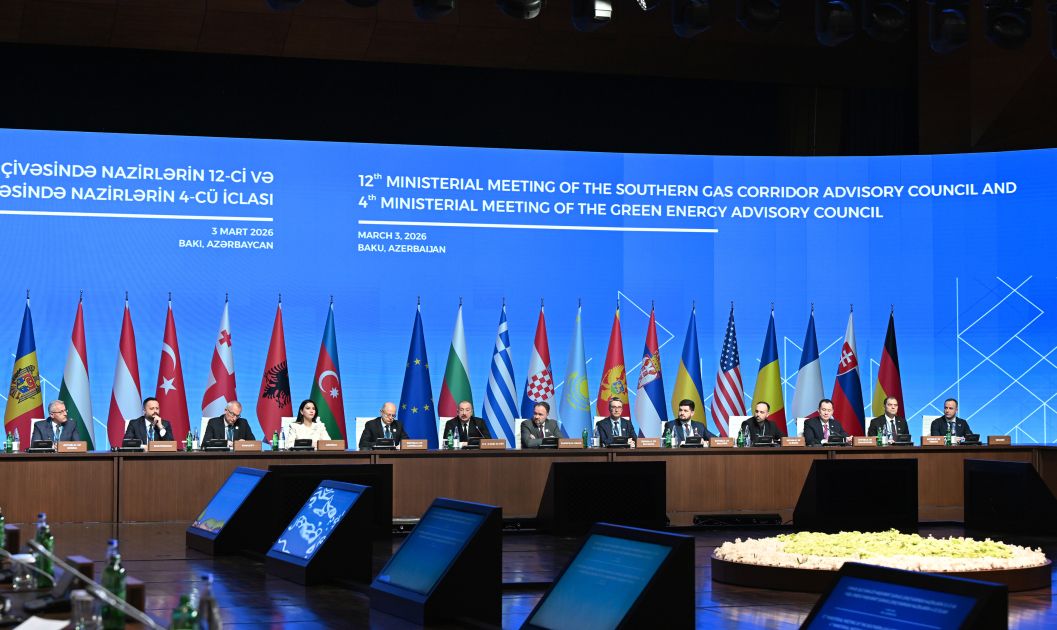
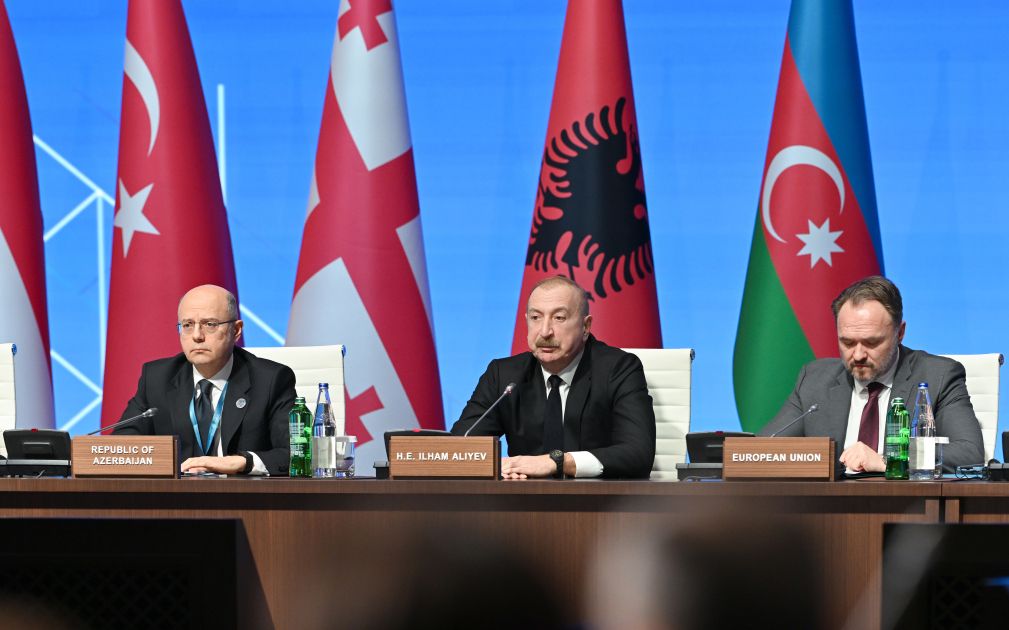
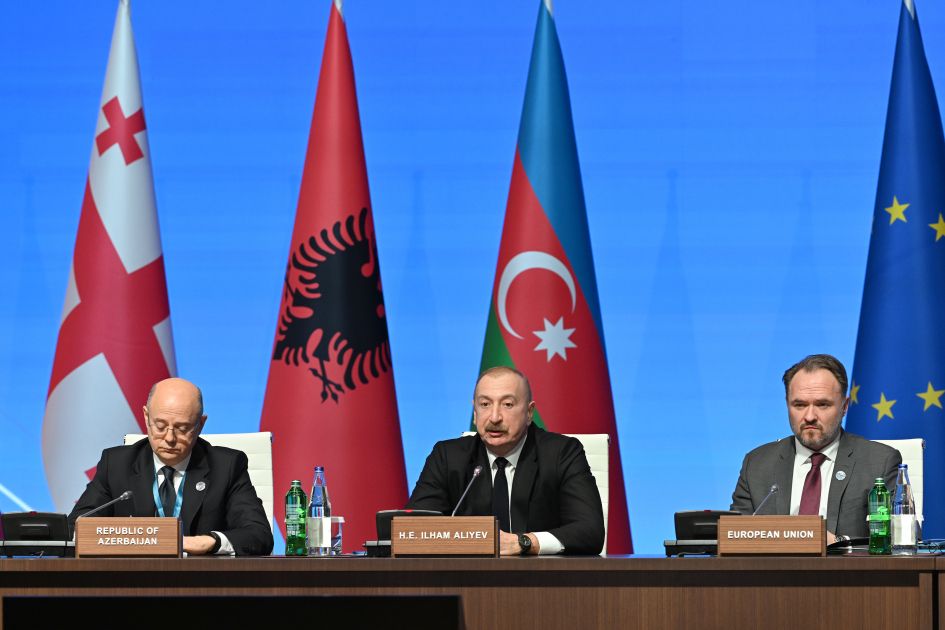
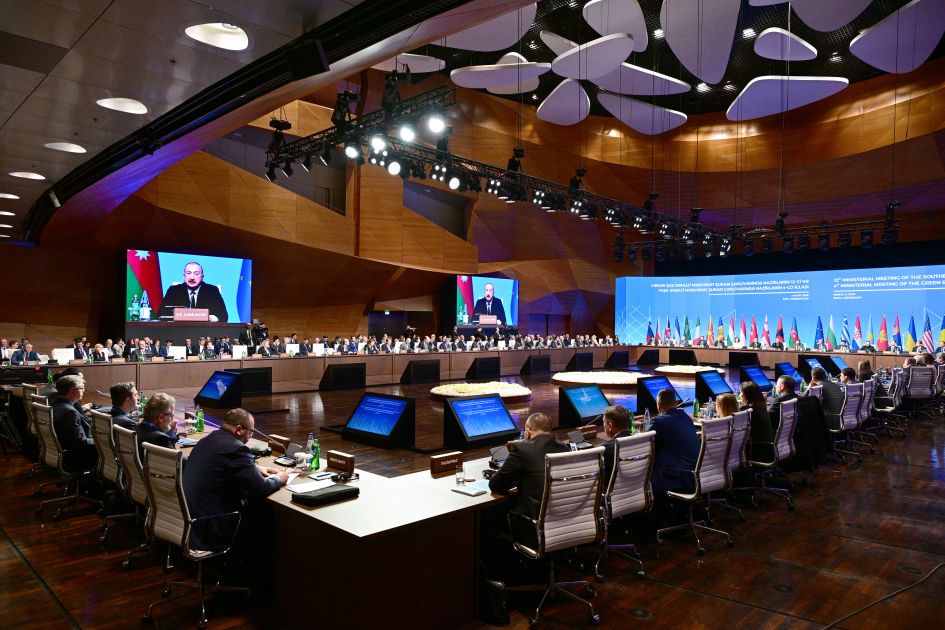
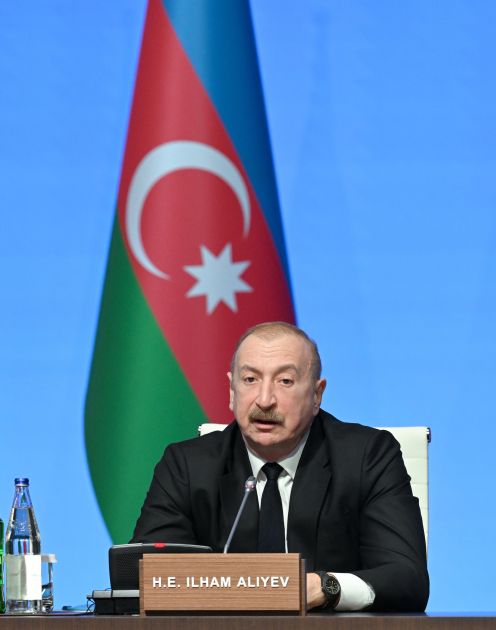
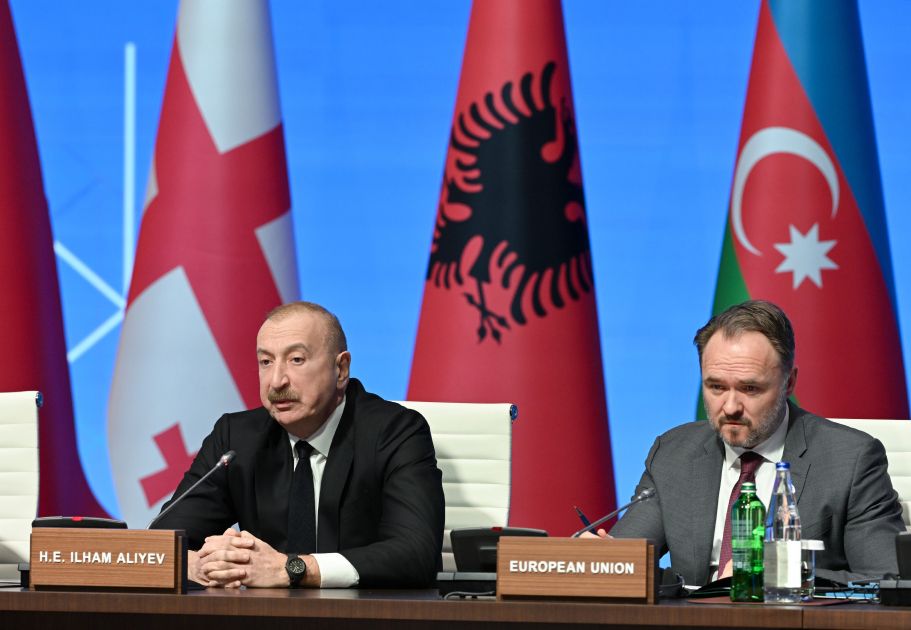
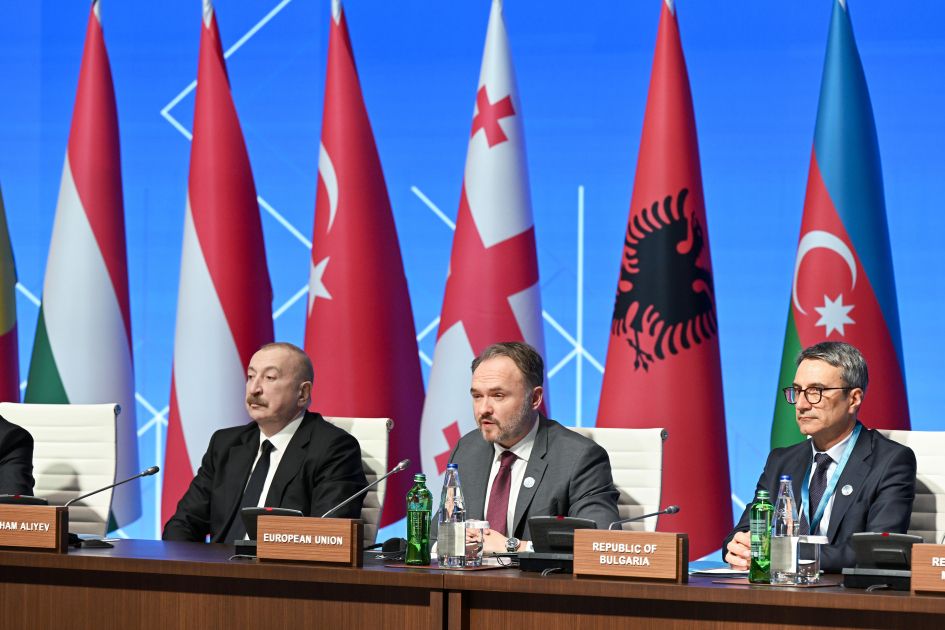
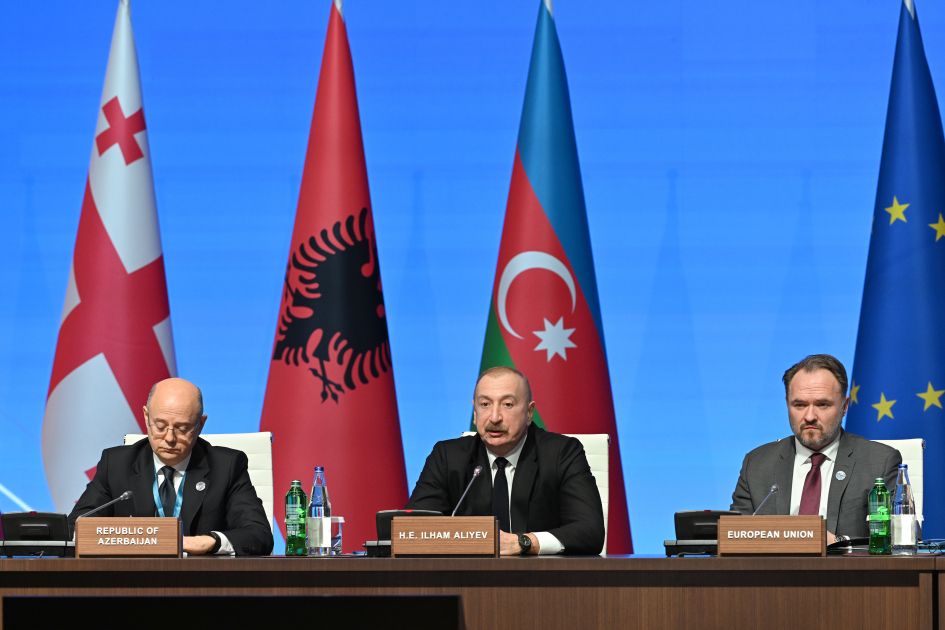
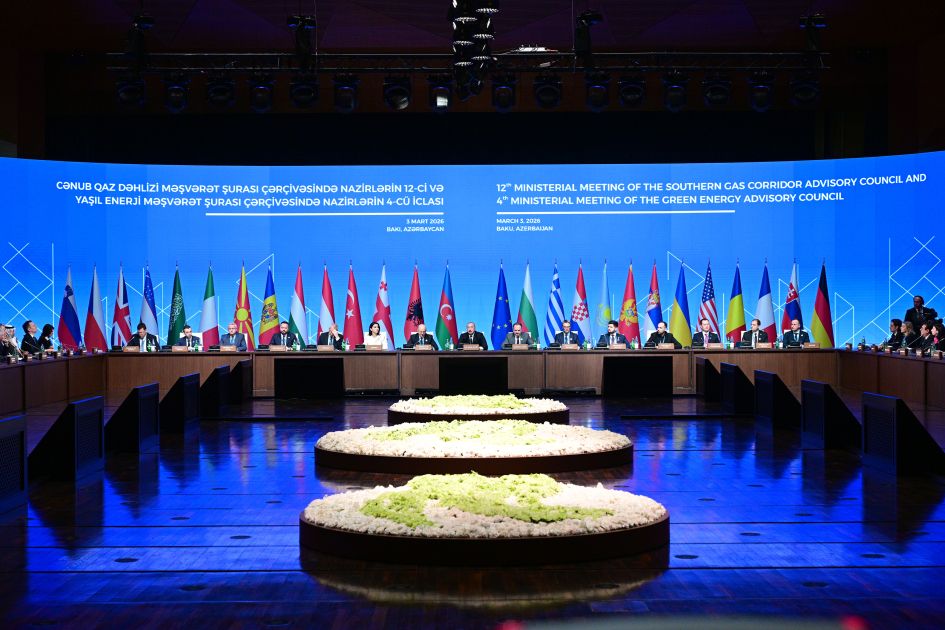
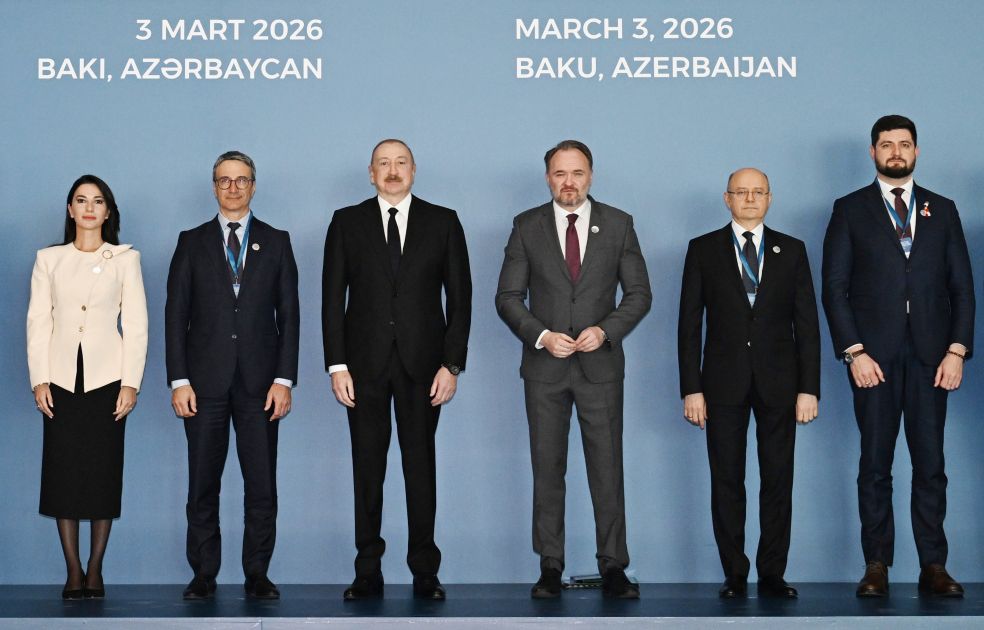
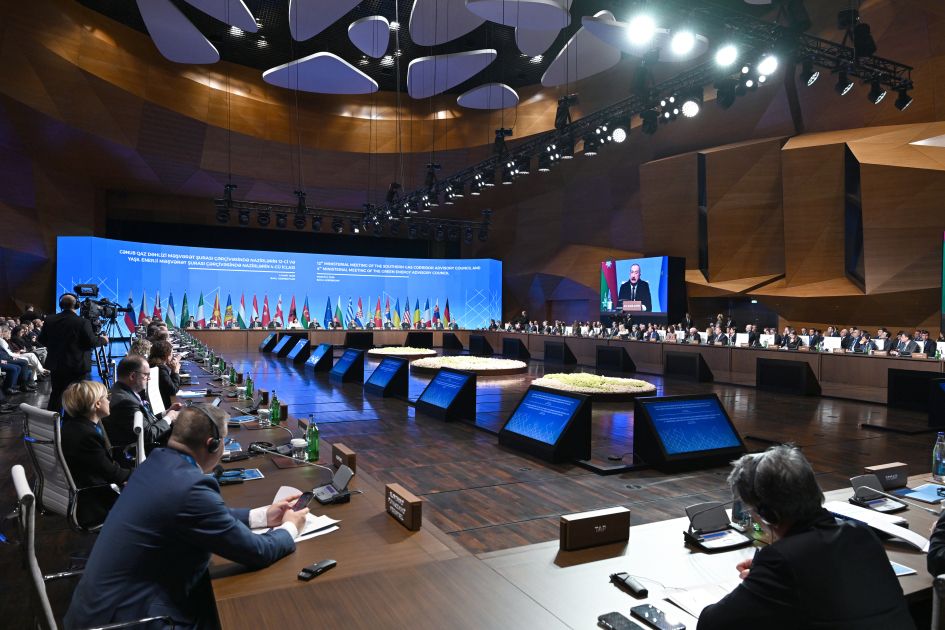
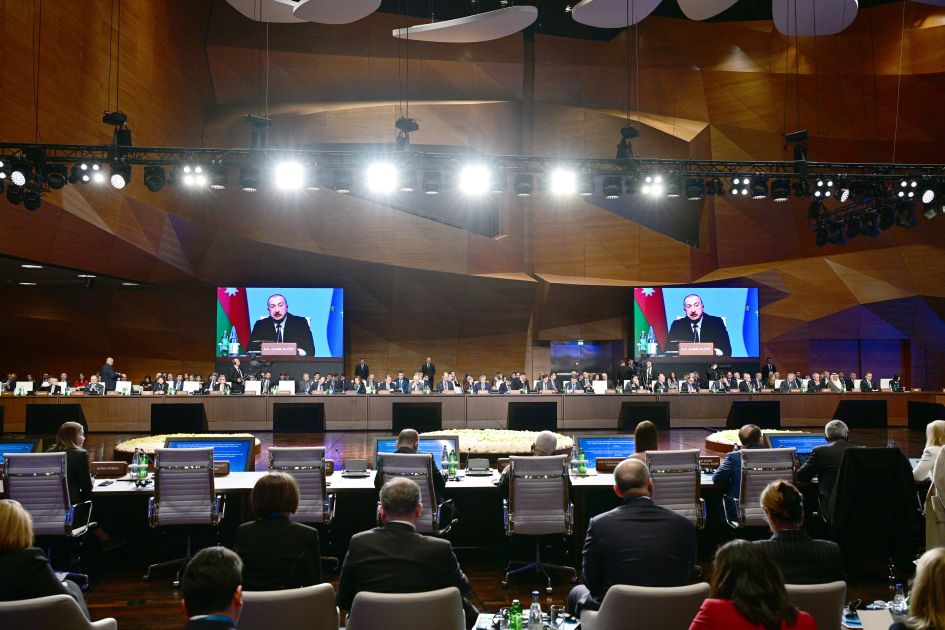
On March 3, the 12th Ministerial Meeting of the Southern Gas Corridor Advisory Council and the 4th Ministerial Meeting of the Green Energy Advisory Council were held at the Baku Convention Center.
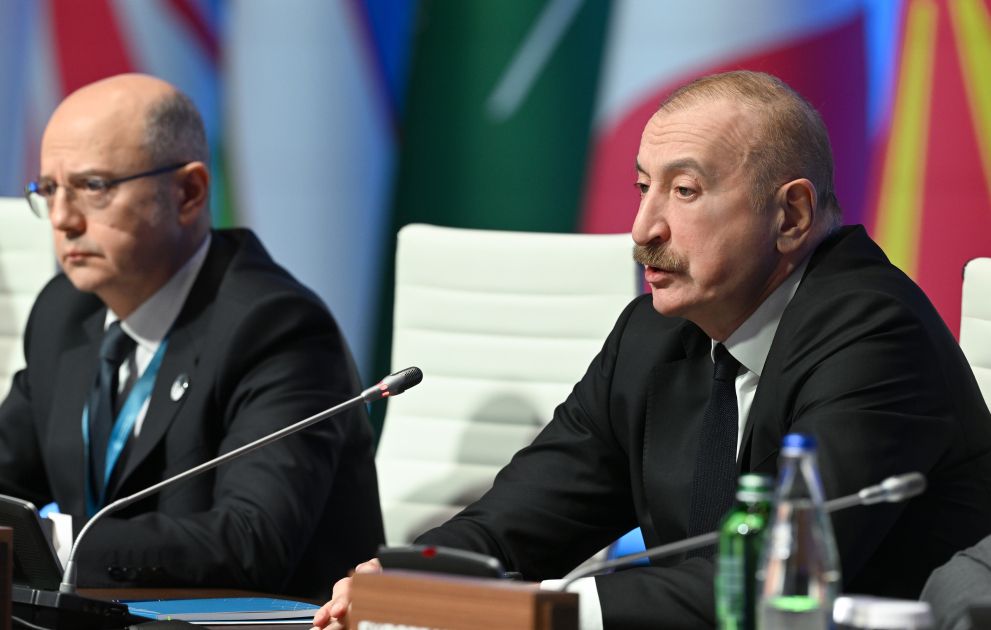
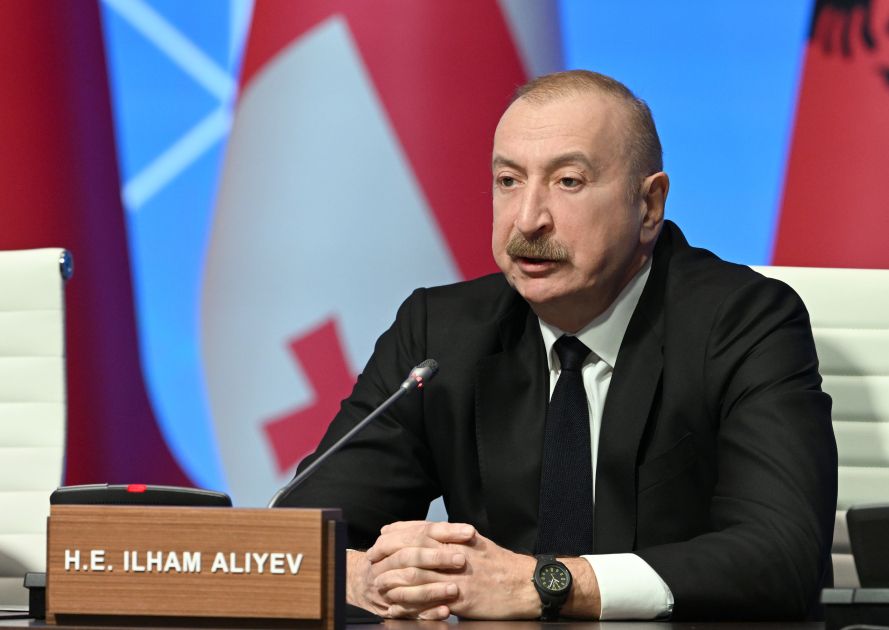
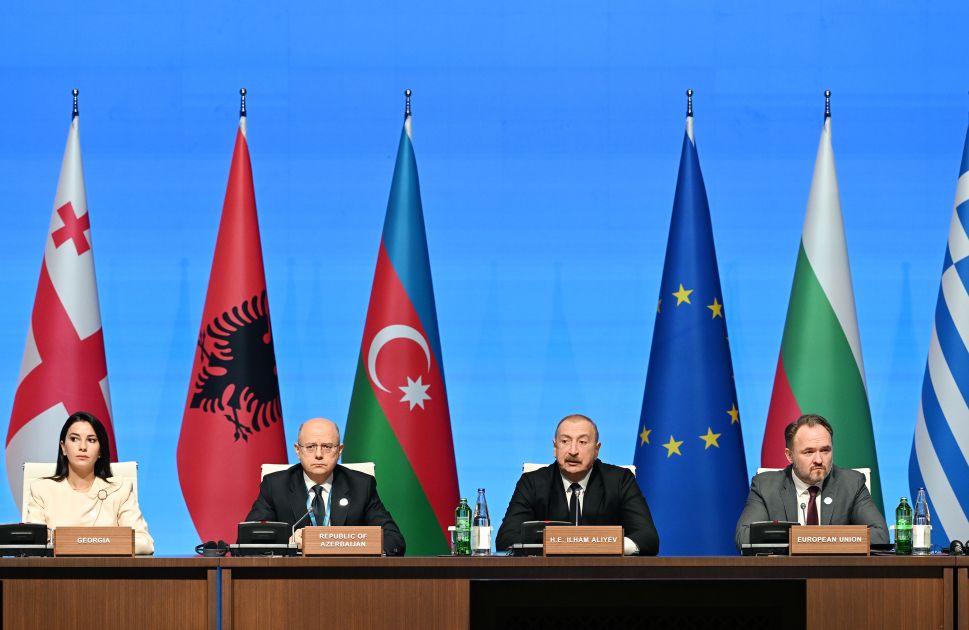
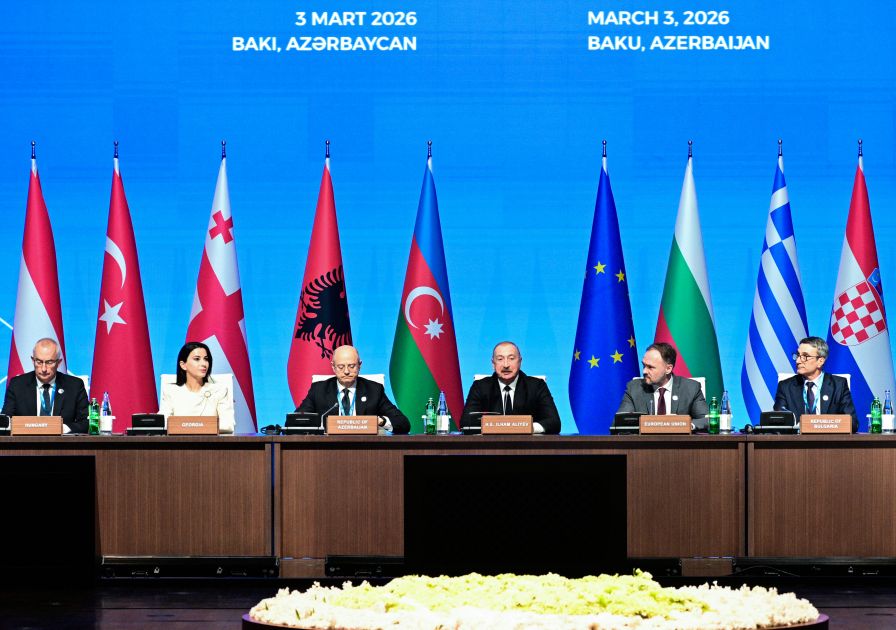
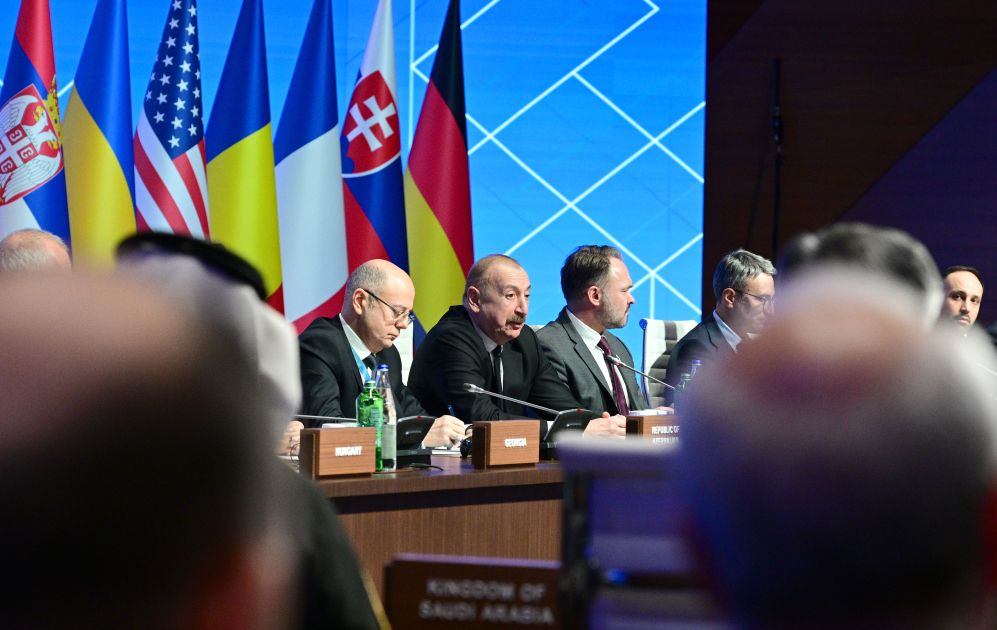
President of the Republic of Azerbaijan Ilham Aliyev attended the event.
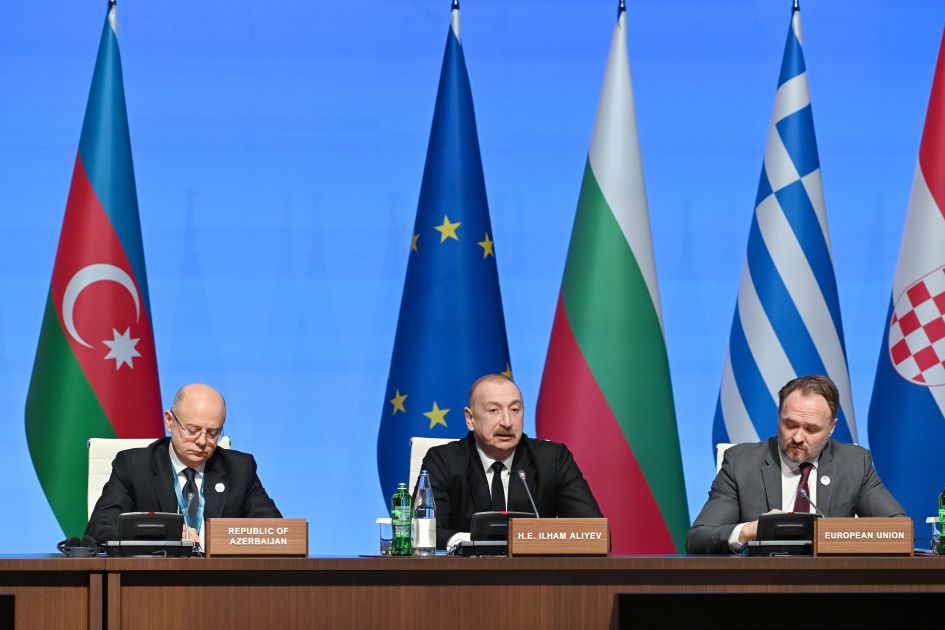
Minister of Energy of Azerbaijan Parviz Shahbazov said:
- Your Excellency, President of the Republic of Azerbaijan, Mr. Ilham Aliyev,
Distinguished EU Commissioner for Energy and Housing, Mr. Dan Jørgensen,
Dear ministers, ladies and gentlemen,
It is my great honor to welcome you to the 12th Ministerial Meeting of the Southern Gas Corridor Advisory Council and the 4th Ministerial Meeting of the Green Energy Advisory Council. This gathering marks another significant milestone in our successful efforts to promote the balanced development of natural gas and renewable energy, as well as to further diversify regional energy connectivity.
I would like to extend my deepest gratitude to His Excellency, President of Azerbaijan, Mr. Ilham Aliyev, for his steadfast leadership and unwavering support in driving this success. It is now my distinct privilege to invite President Ilham Aliyev to deliver the keynote address.
x x x
The President of Azerbaijan addressed the event.
Speech by President Ilham Aliyev
- Good morning, ladies and gentlemen.
First of all, I'd like to welcome all our guests. A special welcome to Mr. Commissioner — he has just arrived and probably needs to be in bed now, but instead he is with us. We highly appreciate that he is participating in this important event, although we know that he had very busy meetings back in Brussels. So really, your presence once again demonstrates the strong partnership between European institutions and Azerbaijan in the area of energy, and not only.
As always, we at the annual Advisory Council review what has been done since the last meeting and also plan our joint future steps in order to strengthen partnership cooperation in the field of energy security and sustainable energy supply.
It has already been more than a decade that this initiative has demonstrated sustainability, and now we understand, maybe more than when we launched this initiative 12 years ago, how important it is to gather together and address important issues of energy security.
Especially if we look back at these 12 years, we see different scenarios, different complications, challenges, and problems. But despite all those difficulties and very hard times in our region, energy security provided by Azerbaijan and its partners, to a number of countries, has really become something that we can feel on a daily basis. If we look at what has been done since we met last time in Baku last year, we again see progress. Every time we talk about progress.
Last time I was addressing the audience, saying that we supply gas to 12 countries. Now the number of countries where Azerbaijani gas has reached its consumers has reached 16. And by this number, Azerbaijan is number one in the world with respect to the number of countries it supplies with pipeline gas.
Last time I touched upon our plans to expand the geography of gas supplies. So, as you see, it has been done. Also, I think an important event was that our gas supplies have already reached other destinations beyond Europe. For the first time, we started to supply gas to Syria in order to help the Syrian people reduce the dramatic electric energy deficit.
By supplying 1.5 billion cubic meters of Azerbaijani gas to Syria, we helped the population be better protected and have more opportunities to do business and make enterprises functional, because everybody knows very well that without electricity you cannot achieve any development. So this was important for Syria, for the region, and for Azerbaijan because diversification of gas supplies for us, as for every country, is very important. We understand the challenges that countries which receive gas face with respect to diversification. But also for producers, diversification is an important factor.
And again, we see positive dynamics in cooperation between the producer, Azerbaijan, transit countries, and consumers. And this unity and shared interests and shared benefits, I think, are the main reasons for our successful journey for more than a decade.
With respect to our plans, yes, we want to increase our presence in the European energy market. We have already started to supply two more countries in Europe — Germany and Austria. Thus, today, 10 members of the EU receive gas from Azerbaijan. In the coming years, with respect to the new production of gas from Azerbaijani fields, we may increase the output. But for that, definitely — and we spoke about that last time — we need to think about the expansion of the existing gas transportation infrastructure, because today the Southern Gas Corridor is already fully packed. We are looking for other extensions and interconnections in order to be able to supply as much as the market needs and probably will need even more, taking into account the current situation in the world, and in order to be able to export as much as we can.
This year, we expect the beginning of production from the ACG deep gas field. We expected production to start last year, but it did not happen. But definitely, this year production will start. In two or three years, we expect the beginning of the full-phase development of the Absheron field, which will increase gas production from Absheron three times. We also expect the beginning of gas production from the second phase of the Umid field.
With respect to our major source of natural gas, Shah Deniz, in 2028, we expect the beginning of production from a new phase of Shah Deniz. All these gas production profiles will allow us, at the maximum level of production, to reach an additional 10 to 15 billion cubic meters of gas. As I said earlier, for that we will need new markets, expansion of the existing pipeline system, and of course, we need to look at how to diversify our gas distribution network.
Part of the discussions for several years at the Advisory Council has been the green agenda. And here also we can report good results. This January, we inaugurated the biggest wind power station in the region so far — 240 megawatts — financed and constructed by ACWA Power.
This is an additional source of green energy to what we already had. In 2023, Masdar built a 230-megawatt solar power station. Several projects are already in the implementation phase, and we expect the inauguration of new renewable power stations in the coming years. Here, we have a good combination of foreign investors and local companies. Local companies, definitely SOCAR, but not only SOCAR — private companies have also started to invest in renewables because we know that there is great potential and market demand.
There are already transmission lines, but there will be more transmission lines. We need to work on that. We need to work jointly on energy cables, including the energy cable stretching from Azerbaijan to Europe across the Black Sea and the energy cable from Central Asia to Azerbaijan. Both agreements have been signed. The feasibility study has almost been completed for one project and will be completed for the other.
If we look forward to when all these projects are materialized, we will see that they will be very sustainable and, I would say, existential for many countries' energy corridors. Our renewable plans are based on contracts that have already been signed.
I would like to underline that they are contracts, not MOUs — so they are contractual obligations. By 2032, we expect 6 to 8 gigawatts of electric power from renewable sources. This, of course, is a big asset. We need to export it and use this electricity for domestic purposes to substitute the natural gas that we are currently using to produce electricity and to provide conditions for a growing economy and growing industry, including our plans with respect to the communications sector, AI, and data centers — all of which are projects already in the pipeline, especially after the signing last month here in Baku between the Vice President of the United States and myself of the Charter on Strategic Partnership between the United States and Azerbaijan, which covers many areas, including AI, energy, connectivity, and many others.
So the realization of our plans, having the United States — the biggest power — as our strategic partner seems to be absolutely realistic. We have been investing and continue to invest in hydropower stations. These projects are being implemented in the territories liberated from Armenian occupation. So far, 307 megawatts of hydropower stations have already joined our system. Our plans are to almost double that, maybe in two or three years, which will give us additional potential and cheap energy.
So hydro, solar, wind, potentially thermal — we are now investigating this issue — gas, and all the combinations — that is how it should be. Coming back to what we discussed even at COP29, when we were hosting this climate conference, I said then — though I realized it was not in line with the trend at that time — that you cannot ignore fossil fuels. If you ignore fossil fuels, that means you live in your dreams.
We all want to have a safe and clean planet. We all do not want to see the complications of climate change. And by the way, here one can see how the Caspian Sea is shrinking year after year. But at the same time, we need to treat this issue from the point of view of pragmatism and realism, not from the point of view of ideology. The combination of fossil fuels and renewables, and especially appreciation of the efforts of countries like Azerbaijan — which has reserves that can be enough for the country and its neighbors for 100 years of fossil fuels, but nevertheless is investing billions in renewables — I think this is how it should be. I am sure all these issues will be discussed at today's event, and we will come up with good solutions.
I would also like to underline that Azerbaijan plays an important role as a reliable transit country for energy resources. We provide important oil transit for Kazakhstan and Turkmenistan, and year after year, the volume of oil transported through our system is growing. We are capable and have the infrastructure to receive more oil from the eastern shores of the Caspian.
With respect to our efforts on the European energy market, I think it is important for the audience to know that we recently acquired one of the biggest power stations in Türkiye — 870 megawatts. Last month, a contract was signed with Serbia to build a 500-megawatt power station there. Our contribution to energy security is not limited to our boundaries or to the Southern Gas Corridor.
Among important achievements for us is also the acquisition of two refineries in Italy with a total capacity of 10 million tons. If we add that to what we already have on the Turkish Aegean coast — a 12-million-ton refinery — in total we will have 22 million tons of refinery capacity in the Mediterranean and Aegean regions, which will definitely help provide sustainable supplies of oil products. Thousands of petrol stations are also part of the deal.
So I do not want to take much of your time. I know that you will be very busy, but I just wanted to underline the main milestones that are important to understand our plans, what has been done, and what we are planning to do. I am sure that, as always, the meeting will be productive, constructive, and result-oriented.
Thank you very much.
x x x
Parviz Shahbazov: Your Excellency, Mr. President, we are extremely grateful for your invaluable remarks. The Advisory Council established with a visionary initiative has evolved into a vital platform, as you have mentioned already in your speech, and it underscores the importance of diversification, predictable investments, and partnership in ensuring energy security and connectivity. We deeply appreciate your continued support and extend our heartfelt thanks.
With your permission, I now turn to the EU Commissioner for Energy and Housing, Mr. Dan Jørgensen. Azerbaijan's key energy projects are Europe-focused, shaping the ever-evolving Azerbaijan-EU strategic energy partnership.
Mr. Jørgensen, the floor is yours.
x x x
Speech by Commissioner Dan Jørgensen
- Thank you, Minister, President, Excellencies, ladies and gentlemen.
I am extremely delighted to be here today, and I want to express my heartfelt appreciation for the warm welcome extended here in Baku, and I thank all of you for accepting our invitation today. They say that “good things come in threes.” So today is the third day of the third month, so it seems appropriate that I share with you three key points for our discussion. First of all, energy security. In 2020, gas started flowing from Azerbaijan to Europe through the Southern Gas Corridor. In 2022, the strategic importance of the corridor became abundantly clear. When Russia began its war of aggression and its weaponization of energy, the European Union took the decision to diversify our energy supplies.
To replace Russian energy, we turned to our most trusted and reliable partners, and Azerbaijan was chief amongst these. Since then, we have significantly increased natural gas deliveries through the Southern Gas Corridor. And since late 2020, the Trans-Adriatic Pipeline has already delivered more than 50 billion cubic metres of Caspian gas to Europe.
With the help of Caspian gas, the EU's dependency on Russian gas fell from 45% of overall imports in 2022 to 12% in 2025, and these numbers will continue to fall. In less than two years, the remaining 35 billion cubic metres of Russian gas that we are still importing every year will be out of our markets. The 10 billion euros per year that the EU spends on this gas bill will no longer finance Russia nor its aggression against Ukraine.
We continue to reduce our dependencies on Russian gas, and the importance of our partnership with Azerbaijan will increase, bringing benefits for Europe's energy security and Azerbaijan's economy. Since the Trans-Adriatic Pipeline started commercial deliveries, Azerbaijan has earned around 24 billion euros in natural gas export revenues from EU buyers through 2024. My visit today is an opportunity to make it very clear. Azerbaijan's gas supplies will remain an important backbone of the EU's energy security.
The EU will remain a reliable purchaser of Azerbaijani gas for the foreseeable future, underpinning structural transformation in the Azerbaijani economy.
Let me turn to my second point. The future of energy security lies in the clean transition and electrification. In the EU, we are deploying renewable energy capacity at record levels. In 2025, for example, renewables generated 45% of our electricity, while EU retail electricity prices remain stable compared to the year before. I know that Azerbaijan also foresees electrification as a catalyst to reduce domestic fossil fuel consumption, therefore opening additional opportunities for gas export revenues.
Moreover, I know that there is enormous potential for electrification throughout the whole region, especially when it comes to heating in households and industries.
With a view to COP31 in Türkiye, let us therefore put the electrification higher on the agenda and identify concrete areas for closer collaboration. Here, let me highlight the role of the EU cleantech industry. The EU offers a world-class cleantech ecosystem from grid technologies and storage to renewables and hydrogen, as well as digital and cyber security solutions. To unlock the potential of this offer and to mobilize private capital at scale, we need transparent and competitive procurement schemes, clear market-driven regulation, and long-term predictability. With these conditions in place, EU companies are ready to engage and commit, bringing financing capacity, technological excellence, and high standards in cybersecurity and system reliability.
So, let me turn to my final point, regional connectivity. In the Black Sea Strategy, the EU committed to a connectivity agenda, aiming to improve transport, energy, and digital connections with the Black Sea region, Türkiye, the South Caucasus, and Central Asia. The connectivity agenda does three things. One, it provides a shared strategic framework. Two, it prioritizes reforms. Three, it links investments with policy. There is a mutual interest in advancing this agenda. Regional electricity connectivity helps to reduce energy system costs, facilitate the integration of renewable energy, and enable two-way electricity flows and trading. This will increase regional power trade and ensure that we make the best use of regionally distributed renewable energy resources.
Connectivity must also be understood in an integrated way, encompassing both hard infrastructure and soft connectivity, including regulatory convergence, market integration, and improved governance frameworks. The EU stands ready to explore further opportunities to strengthen energy connectivity and the energy transition in the region, including through the mobilization of guarantees and blended finance instruments.
The active involvement of the private sector will be essential, and EU companies bring significant added value in expertise, innovation, and standards. The EU will also stand ready to support partner countries in the region to go further in strengthening their energy regulations. The recently launched third phase of the EU4Energy programme will further advance this work and provide concrete technical support on bilateral and regional levels.
It is great to see the plans for cross-border electricity interconnections that have been announced over the last years. Considering the number of initiatives announced, it is important that these projects are implemented based on sound economic and system integration analysis. I look forward to the results of the feasibility studies currently being implemented.
Dear friends, to conclude, let me once again thank you, Your Excellency, President Aliyev, for welcoming us here today, and let me thank you for giving us the opportunity to deepen our discussions and reinforce our relationships. In these turbulent times, these relationships are more important than ever. President, last year when we met, we did indeed say “These are complex times.” Now, unfortunately, they're even more complex. And with these objectives in mind, I thank you for your time and look forward to our discussions. Thank you.
x x x
Parviz Shahbazov: Commissioner Jørgensen, thank you for your insightful speech. With your co-chairmanship, we believe that the strategic energy dialogue between Azerbaijan and the EU will continue to develop and yield fruitful results. This concludes our opening session.
Mr. President, thank you very much for being with us today.
x x x
The meeting was attended by representatives from 27 countries, including Azerbaijan and various European nations, 11 international financial institutions and organizations, and 49 energy companies. Participants include ministers, deputy ministers, and other high-ranking officials.
Following the opening session, the summit continued with a Ministerial Meeting and plenary sessions titled Southern Gas Corridor Session: Sustaining Success and Driving the Next Phase of Development of the Southern Gas Corridor and Green Energy Projects.
The EU-Azerbaijan Green Connectivity Investment Roundtable will be held as part of the Advisory Council.
At the end of the event, a press conference will be held on the outcomes of the 12th Ministerial Meeting of the Southern Gas Corridor Advisory Council and the 4th Ministerial Meeting of the Green Energy Advisory Council.
The Southern Gas Corridor Advisory Council Ministerial Meeting has been held since February 2015.