Double Standards of Developers: How Square Meters Are Calculated in Baku When Buying and Demolishing Housing

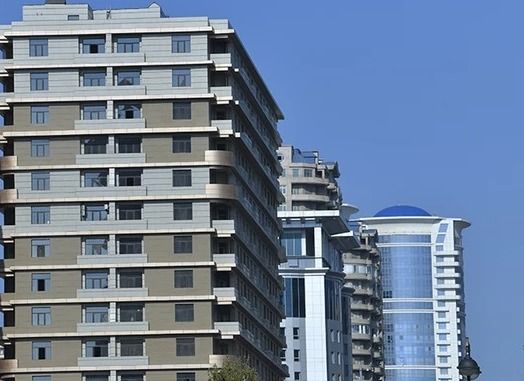
The demolition of old buildings and the construction of new ones in their place continues in Baku and other cities across the country. However, this process of housing stock renewal brings up issues that cause public dissatisfaction. One of them is related to differing approaches used for calculating apartment areas when purchasing a home and when paying compensation for demolished real estate.
Specifically, construction companies often calculate compensation for acquired apartments solely based on the area specified in the technical passport, refusing to pay for the remaining space or offering negligible sums for it.
Conversely, when selling apartments in new buildings, developers calculate the area along the outer perimeter, including wall thickness and balconies, and require buyers to pay for all of these square meters. As a result, citizens face significant financial losses both when selling old housing and when buying new.
Why is a uniform approach to calculating apartment areas not applied in both cases?

As Vugar Alakbarov (Vugar Oruj), Chairman of the Azerbaijan Appraisers Society, noted, different approaches are indeed applied today when determining apartment areas.
"Housing-construction cooperatives (HCCs) and other construction companies indicate the total area of apartments in contracts, including wall thickness and balconies. For instance, a contract might state that an apartment's area is 150 square meters. However, the State Real Estate Registry does not take the area occupied by walls into account when issuing a title deed (extract). Meanwhile, the balcony area is calculated with a coefficient of 0.3.
As a result, instead of the 150 square meters stated in the contract, 125–130 square meters are reflected in the documents. Only then does the citizen realize they have suffered significant financial losses. At the same time, they have no way to compensate for the damage caused," the expert noted.
According to V. Oruj, this issue is regulated by Article 12.5 of the Housing Code. However, the code does not provide a clear procedure for calculating apartment area.
"The article merely states that the total area of an apartment consists of the living spaces used by the citizen and auxiliary spaces.
Construction companies skillfully take advantage of this legislative loophole. I believe it is crucial to introduce relevant amendments and additions to the Housing Code in the current situation. The rules for calculating apartment area should be enshrined in legislation in a language that is simple, clear, and understandable to everyone," he emphasized.
The expert also drew attention to the problem of determining apartment areas when paying compensation for demolished housing.
According to him, companies engaged in building demolition in many cases calculate compensation exclusively based on technical passport data. However, this approach cannot be considered correct either.
"A uniform approach to determining area must be applied both when selling apartments and when calculating compensation for demolished housing. The absence of such an approach leads to the violation of citizens' rights," the expert emphasized.